VIDEO: Excessive Jargon
Here's a short video that parodies what happens when you use too much jargon. No one understands anything!
Here's a short video that parodies what happens when you use too much jargon. No one understands anything!
Back in January, I outlined the basic 4 P's of marketing in my post, Marketing basics - the 4 P's. As a recap, the 4 P's (plus 1) of traditional marketing are:
 I came across a post called Marketing Remix, by John Sviokla, that provided a new 4 P's (err... plus 1!) It's an excellent read and demonstrates how marketing is shifting from the traditional view to a newer paradigm. To paraphrase (as well as add some of my own thoughts):
 Please go read John Sviokla's post. It's an excellent read for new age marketing.
Time magazine has an interesting article called, A Game For All Ages (by Lev Grossman), which provides a hands-on preview of the new Nintendo Wii video game system. The control system used for this game platform would qualify as revolutionary (see an earlier post Types of innovation) as it incorporates motion sensing technologies into a controller that resembles a remote control (something a lot of us are too familiar with.) It has potential to change the way people play games since a different level of interaction can be used (see the article for details.) Of course, it remains to be seen how well this translates into profit.
In the article, there were two very interesting comments that stuck out to me:
If you are simply listening to requests from the customer, you can satisfy their needs, but you can never surprise them.
 It is definitely more difficult to come up with revolutionary ideas. When listening to your customers, you'll hear more along the lines of the tried-and-true with some new bells and whistles. On the otherhand, you can't ignore your customers either.
 Cutting-edge design has become more important than cutting-edge technology.The overall experience of using a product or service is the new paradigm. Simplicity of design and usability are key factors for success and product adoption. Think of why the Apple Ipod has been so much more successful than any of its competitors.
 When I hear the word agile, I think of the class of system development life cycle methodologies that are fairly people-oriented. Agile methodologies assume that change will occur and they are flexible enough to handle it. Characteristics include (you can also see my post called, Choose a methodology that suits your project):
As companies migrate their systems to more of a service-oriented architecture (SOA) approach, agile development methodologies are proliferating. These approaches are very useful for developing reusable components - a necessity for SOA.
What does "business agility" mean?
The ability to rapidly adapt and capitalize on opportunities or overcome problems. It does not necessarily imply that you are reactive or proactive. In truth, agility means you can adapt readily in preparation or response to stimuli. Obviously, having reusable components and an SOA framework support business agility. However, true business agility is more than just that.

I remember reading, The Regis Touch - New Marketing Strategies for Uncertain Times by Regis McKenna. In his book, Regis illustrated one of the best examples of business agility that I have come across. He recalled an experience he had when he was working as a consultant with Intel. Intel's sales teams had encountered a issue with their customers asking them about a pending competitive microprocessor product launch from Motorola, the 68000 processor. Customers were considering holding off purchases until they could assess Motorola's offering.
This message reached the ears of Intel's executives who organized a marketing response which included their product roadmap and vision. In addition, they setup seminars with clients where Intel could capitalize on the credibility of their executive staff (e.g., Gordon Moore & Andy Grove.) This marketing strategy was relayed back down to their sales staff who championed it.
Intel's actions avoided a significant competitive threat. The amazing part is that it only took 7 days for Intel to generate their positioning strategy and put it into place. That's business agility!
During the last month I have blogged on marketing and presentation topics. I wrote about the marketing mix, segmentation and positioning. I provided some presentation guidelines as well as some thoughts on how to craft your presentations and arguments to be more appealing to different types of people. What I want you to realize is that you do not need to view these posts as isolated topics. You can use what you know about marketing to help you when you are trying to approach people and introduce different ideas. Likewise, you can use what you know about tailoring communications and creating effective presentations to assist you to market ideas more effectively.
All of this is geared towards improving your communication skills which will make you a more productive and effective person. Think about the different ideas I have written about and see which ones work for you and which ones do not. Does it change your perspective or approach?
 Basic Marketing Classes
I remember many of the lectures I received back in university on different marketing concepts and principles. Introductory marketing courses generally dealt with situations in existing markets for products.
In stable established markets, companies ceaselessly fought for marketshare. Think about how Coca Cola and Pepsi have fought over the soft drink market for the last century. The game was to take share from your competitors.
In growth markets, the objective shifted to growing faster than the marketplace was growing. If you can accomplish that it was likely that your company was growing faster than your competitors. Eventually, growth will taper off and you will be left fighting it out for marketshare. Parallels between marketing and warfare
In the past, a lot of parallels were drawn between marketing and war. If you step back and listen to the terminology used you will hear words like: mission, strategy, tactics & campaigns. All of these terms are associated with military activities. Books like Sun Tzu's "Art of War" or Carl von Clausewitz's "On War" provided insights into the prevailing marketing thoughts of the time. For a more complete read on marketing warfare follow this link to Wikipedia.
Marketing in innovative times
Marketing approaches have changed towards market creation and generating consumer loyalty. Why fight over a market when you can build your own or make your marketshare more profitable? An excellent source for insights into marketing is Seth' Godin. He has a lot of interesting thoughts and observations on his blog (a must read for people interested in marketing or innovation.) Another good blog on this subject is Guy Kawasaki's.
Marketing and you
Many people view marketing with disdain. They think of all the direct mail and junk email that floods their inbox. They see the plethora of TV advertisements and messages that are shoved down their throats. As such, they dislike or distrust marketing in general.
But there is a practical side of this. One that applies to you. What are you doing when you are giving a presentation? Or looking for a job? Or trying to convince someone of something? You are essentially, marketing to them!
Take the example of designing a presentation. Your idea or message is the product you are trying to sell. Your presentation and conversational skills are your promotional tools. Face to face discussion is your distribution means ("place.") Product, promotion and place... these are all elements of the marketing mix! Your audience is, in truth, the target consumer.
I know that I have not gone very deep into marketing and all its nuances. However, what I am hoping is that you can take something from what I have said and apply it to your day-to-day activities. Perhaps, you can get a different perspective on things and use this to your advantage.
 In a previous post, Marketing Basics - the 4 P's, I wrote about the marketing mix. The 4 P's were: product, price, place and promotion. By varying these elements a marketer can create a more appealing offering to a specific group of individuals (alternatively called a segment.)
The last P of marketing is concerned with how a product is perceived in a marketplace vis. a vis. other products. This concept is known as positioning. Positioning occurs when people identify a specific perception to a product. For example, Rolls Royce automobiles are viewed as some of the most luxurious and prestigious vehicles around. Once ingrained, these perceptions are extremely difficult to overcome. If you have a bad experience with a company you may tell all your friends about it and allow it to influence any future dealings you have with that company.
That is why company's spend a great deal of time and effort cultivating favorable impressions and counteracting activities that have undermined their market position. Do you remember what happened when there was a Tylenol scare at Johnson's & Johnson's in 1982? In brief, extra strength Tylenol capsules had been laced with fatal levels of cyanide. Many unfortunate individuals had taken Tylenol to relieve headache and fever symptoms only to receive a fatal dosage of cyanide. If you read Tamara Kaplan's write-up, you will see how Johnson & Johnson's was able to salvage their brand and maintain their leadership position.
One thing to note, product positioning will occur whether a company wants it or not. You can either allow the market to determine where a product will shake out or you can try to help influence the outcome. Using a marketing mix can help influence a product's position, however, nothing will compensate for a bad product. A lemon is a lemon after all.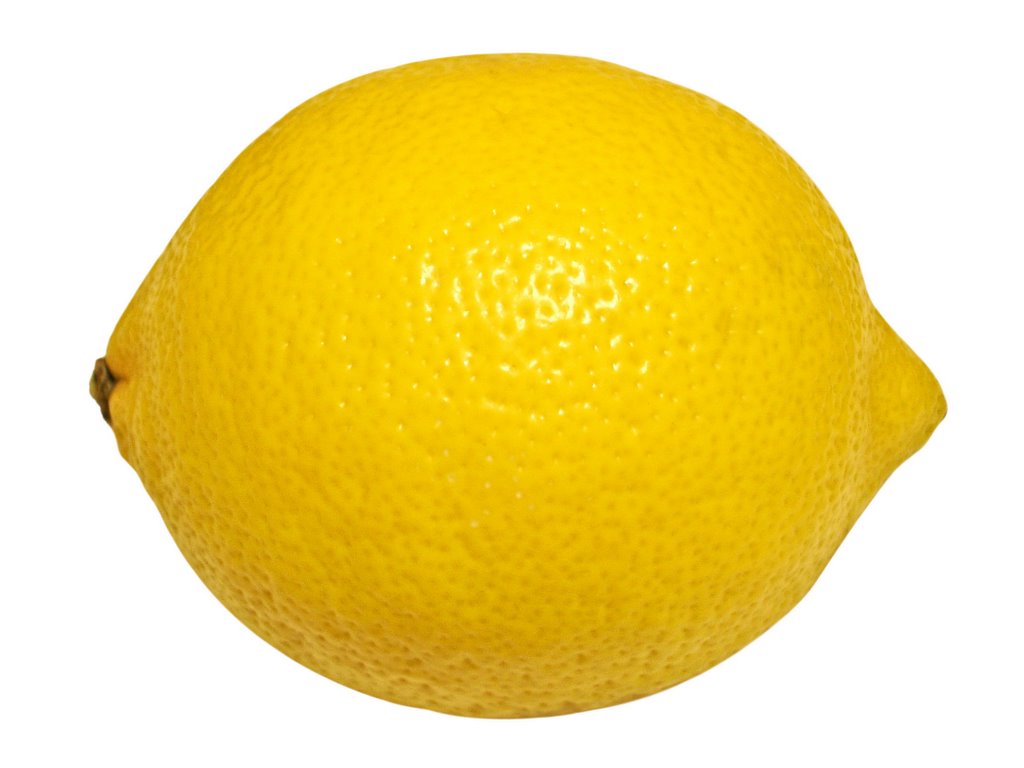
In my previous post, I alluded to the fact that a market for a product (either a good or service) is generally segmented into distinct groups of consumers. Each group of consumers may receive a different marketing mix tailored to specifically appeal to them. This will attempt to maximize profit by:
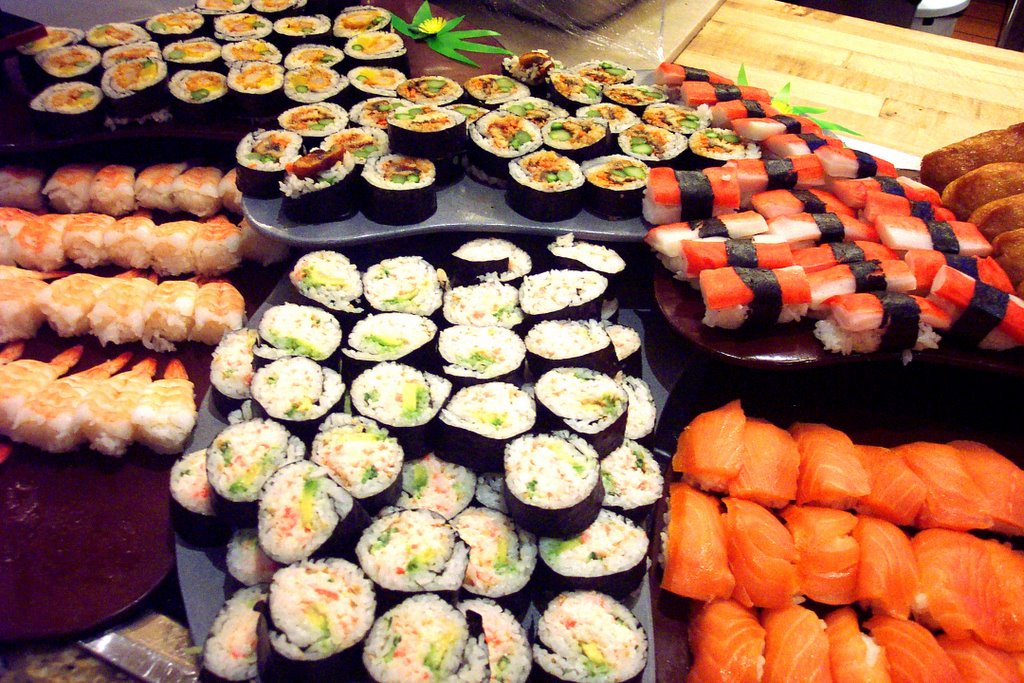

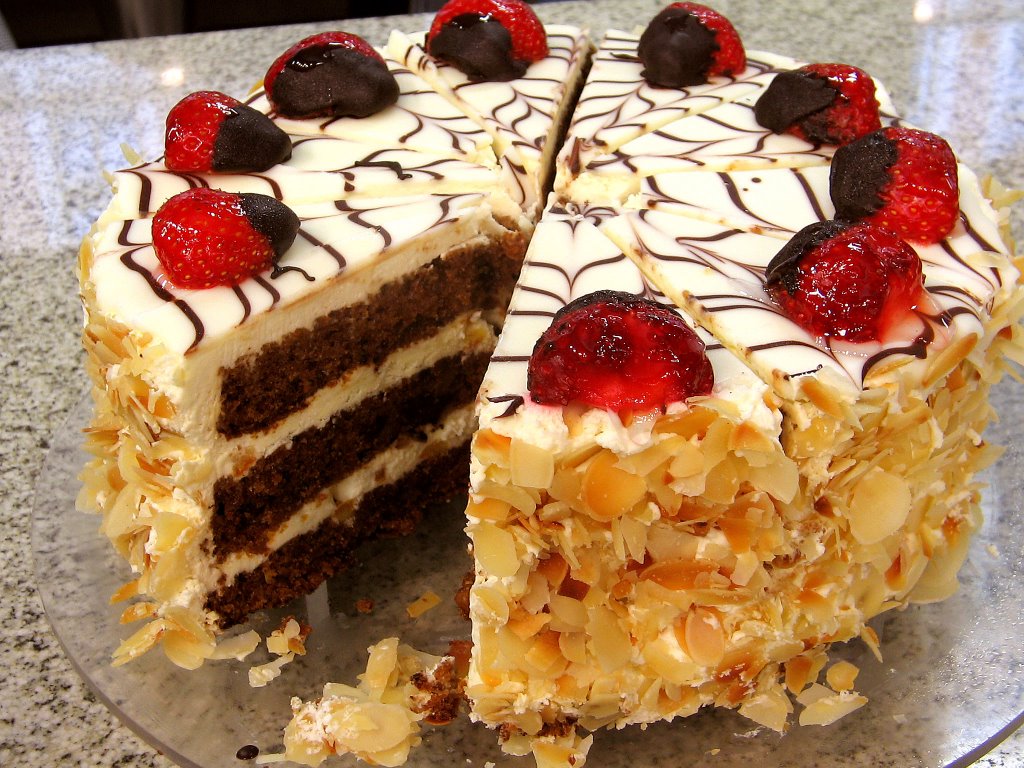 On my last post, I spoke of the 4 P's that composed the marketing mix. I left off where you knew what the components were but stopped before I said why you would want to manipulate them. The topic of this post will be to show why you would alter the variables in a marketing mix to reach your (potential) clients. Welcome to the art and science of segmentation.
Segmentation is the division of a market into smaller homogeneous groups or segments - similar but not quite the same as dividing a cake into slices (for a more complete definition of segmentation check out Wikipedia.)
Individuals within the same segment share similar characteristics but those in different groups will have differences in their characteristics. Because there are differences between one segment and another, a marketing approach that works well for one group may perform poorly for another group.
Characteristics that can be used to define a segment include:
In order to determine what is the best way to segment a market for a specific product the key attributes must be identified. It is beyond the scope of this post and my knowledge to delve into this discipline suffice it to say there may be a lot of analytical work and data mining activities. Eventually, you will be able to distinguish the different segments that compose the market for a product.
Suppose you have figured out that there are 4 different segments that seem like good fits for your product. You will need to determine which segments will be worth investing in based on their perceived value. By examining the different groups, it may become apparent that each group may require a different marketing mix composition in order to be appealing to each segment. By tailoring the marketing mix you can design an offering that matches & appeals to the needs, goals & wants for each group of consumers. This is the answer to the question, "Why would you want to adjust the components of the marketing mix?" What is marketing? What is meant by marketing a product?
The purpose of marketing is simply to sell a product or service. Most people associate marketing with selling physical products. We visualize Coca Cola advertisements, Best Buy flyers, for sale signs, posters on buses etc... Many also view marketing as trying to make a product stand out versus other competing ones.
However, you must understand that this also applies to ideas and concepts. When you are trying to get someone to "buy into" your idea you are subconsciously marketing it to them. The facts you use and the presentations you put together are in essence marketing activities.
To explain the basic tenets of marketing, I would like to go through an introduction to the 4 P's of marketing. Combined, these 4 items make up what is known as the marketing mix. The 4 P's are:
Each component of the marketing mix has variables that can be changed. A change in one variable can result in a change in the perception of a product. Furthermore, different variations of a marketing mix will be more or less appealing to specific individuals or groups of consumers. The different variables of each P are:
How do you know which variables to manipulate? For the answer to this question you will need to read my next post on segmentation.


