Poll: What do you use for requirements management?
 What requirements management tool do you use and why do you use it? I've placed a poll on the right menu bar.
What do you like about it and what don't you like?
What requirements management tool do you use and why do you use it? I've placed a poll on the right menu bar.
What do you like about it and what don't you like?
Here are some web applications that you can use to improve your productivity as a business analyst. All of these are free! But you should realize that there are some things you need to consider when using these types of products:

List of web apps
Unfortunately, I have not found any free online tools that support things central to business requirements such as traceability and change request management. Perhaps that's an idea for a Web 2.0 start-up. Hmmm...
According to new research on the Discovery Channel's website, cockroaches get together to make group decisions about things that affect them as a community. Even more astonishing, cockroaches do so without being able to make sounds. Perhaps, we can learn something about the science of decision-making from them.
Common myths about decision-making
What's it worth?
Here are some basic questions that you should consider to understand the importance of a potential decision.
Some decision-making techniques
To help you with your decision-making needs I have listed off a few different techniques that may be useful.
 Use a SWOT analysis to evaluate different solutions to a problem or opportunity. This will give you an understanding of their overall appropriateness.
Some other great resources
Stay committed to your decisions, but stay flexible in your approach. (Tom Robbins)
 Over the weekend I decided to change the look and feel of my blog. I'm using one of the default templates from Blogger with some additional scripting for items such as:
Aesthetically, I think it is a little easier on the eyes though I'm annoyed that my name keeps wrapping but I can let that slide.
For my next set of posts, I will be focusing on the tasks that a Business Analyst will be expected to perform during the different activities that occur in a system development life cycle. I am using the word activities rather than phases, because the latter leads people to think of a more waterfall-type of approach. 
While there is nothing wrong with that, I want you to realize that when Agile methodologies are employed, some requirements sets will be in the process of being implemented, while others will be in the process of being built, while others will still be in requirements gathering stages. Based on the stage a requirements set is in, different support activities will be needed.
I was reading a post on Tyner Blain entitled, "Requirements management software will not solve the problem." Scott's point is the use of requirements management software does not mean you will have decent requirements for your project. I agree whole-heartedly.
I have found writing requirements is very different from writing prose or telling a story. Just because you have MS Word or another word processor it does not mean you are a writer. A person could be a writer using a word processor, an old-fashioned typewriter, or even pen and paper. The skills and talent to be a writer do not come from the tools used.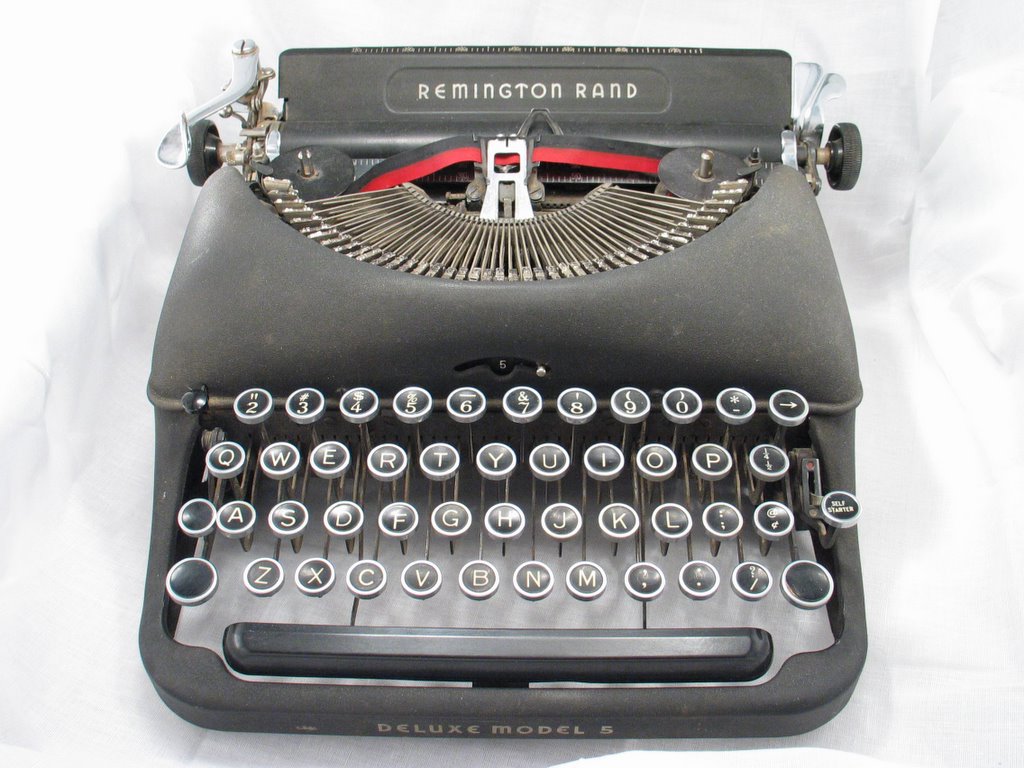 Writing requirements is a skill. And as with any skill, it needs to be cultivated and practised. To help you learn this I have put together a lot of posts on items that will help you improve. After you have increased your proficiency, you will be ready to use requirements management tools to improve your productivity. Note that it will take time to learn how to use the tools properly to gain all of the benefits they provide.
Cultivating the skill
Below are some of my older posts that will help you hone your requirements writing skills.
Tips on how to gather requirements: Understanding the Situation, Requirement Gathering Techniques, Expectation Setting, Time Estimation, Preparation and Words to Look Out For.
Tips for writing requirements: Correctness, Completeness, Clarity, Consistency, Testability, Traceability, Feasibility and Design Independence.
Things to avoid when writing requirements: Ambiguity, Multiple Requirements, Escapes Clauses, Rambling & Mixing, Speculation & Jargon, and Wishful Thinking.


